Chirpy Sort: Bird Color Puzzle
- 4.8
- Rating
- 1.00M
- Installs
- Free
- Price

 Analysis by App-foxy
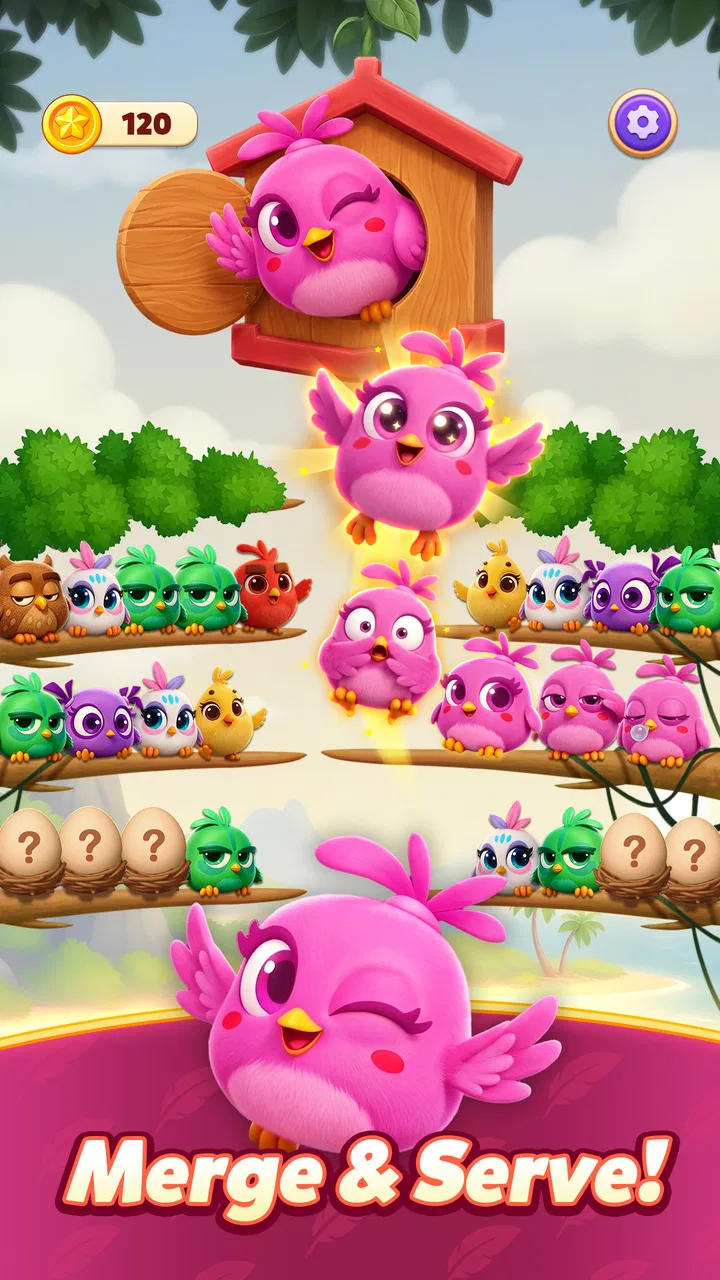
I spent time with Chirpy Sort: Bird Color Puzzle as a light, casual game rather than something meant to dominate a long gaming session. Its basic appeal is easy to understand: move colorful birds into suitable groups, watch the board become more orderly, and enjoy the soft presentation while thinking through the next move. That combination makes it a natural fit for short breaks, especially when I want a puzzle that feels gentler than a timed arcade game.
The game is free to start and is rated for Everyone, so it is approachable for a wide range of players. It comes from AIM TOP GAME TECHNOLOGY LIMITED - Bird, and its current version is 1.3.1. I also found it reassuring that it has already attracted over 500 thousand installs and holds a 4.7 average from around 7 thousand ratings. Those figures do not replace personal experience, but they suggest that the simple bird-sorting idea has found a receptive audience.
How the early goals make the first sessions work
The strongest part of the opening is that the objective is immediately readable. I do not need a long explanation to understand what I am trying to achieve: the birds need to be arranged by color, and each move should bring the board closer to a clean result. That clarity matters in a casual puzzle. I can open the game while waiting for a bus or taking a short break and begin playing without first learning a complicated control scheme.
You May Also Like

 Blood Strike: 2.5 Anniversary
Blood Strike’s Loadouts Turn Every Drop Into a Tactical Gamble
A close look at Blood Strike’s custom loadouts: how fast access to signature weapons reshapes its battle royale rhythm, rewards preparation, and narrows the gap between fights.

 Pandora - Music & Podcasts
Pandora’s Music Is Easy to Start, but Harder to Recover
Pandora’s strength is its low-effort path from a seed to a station. Its weak spot is how much confidence it asks you to place in connection, setup, and quiet recovery.

 8 Ball Pool
 Is Built on Rivalries, Rematches, and Routine
A close look at the rivalries, rematches, shared routines, and unanswered safety questions that turn a quick pool match into a persistent mobile community.

 Samsung Music
’s Quiet Strength Is Playing What You Already Own
Its reach comes less from spectacle than from dependable access to a personal library. That simplicity is both the app’s strongest retention engine and its ceiling.

 AccuWeather: Weather Radar
AccuWeather Review: A Quick, Clear Forecast for Everyday Decisions
For everyday plans, the best forecast is the one you can understand quickly. AccuWeather makes rain timing, radar, and local conditions easy to act on, with a few trade-offs.

 Hill Climb Racing
Why Hill Climb Racing Still Turns Crashes Into One More Run
A tiny car, a bumpy hill and one more upgrade: Hill Climb Racing keeps resurfacing because its simple chaos makes every near-miss feel personal.
More From Our News Desk



The early goals are satisfying because they create visible order. A messy arrangement gradually becomes more organized, and every correct placement gives me a small sense of completion. The cute bird theme helps here without getting in the way. Chirps and cozy colors make the task feel friendly, while the sorting rules provide enough structure to keep it from becoming a purely decorative experience.
I would recommend beginning with a patient approach instead of tapping quickly. In a color-sorting puzzle, a move that looks helpful can sometimes reduce the number of useful spaces available later. My practical tip is to look for the birds that are blocking access to other colors before moving the most obvious match. This turns the opening from random rearrangement into a small planning exercise, and it is one of the first signs that the game rewards attention more than speed.
The early stages are particularly suitable for children, families, and players who prefer calm mental tasks. The Everyone rating supports that broad accessibility, although younger players may still benefit from an adult explaining the sorting idea the first time. For adults, the appeal is different: the game gives me something simple to focus on without demanding the concentration of a strategy title or the reflexes of an action game.
There is also a useful distinction between relaxing presentation and effortless play. The sound and colors suggest a soothing experience, but the puzzle itself can still ask me to think ahead. That contrast is a strength. If every move were automatic, the pleasant theme would quickly become background decoration. Instead, the visual softness makes the moments of hesitation feel less stressful than they might in a harsher-looking puzzle game.
What counts as progress when the game stays simple
Chirpy Sort does not need a complicated progression system to communicate improvement. The clearest progress signal is the board itself: fewer misplaced birds, more completed color groups, and a growing sense that the remaining problem is manageable. I can see whether I am making a good decision without needing a separate dashboard full of numbers or badges.
That simplicity is useful for casual players who want immediate feedback, but it also defines the game’s limits. Players who expect elaborate character upgrades, a story campaign, or a large collection of unlockable content may find the experience restrained. The satisfaction comes from solving the current arrangement, not from building a larger virtual collection or changing a character’s abilities.
I found it helpful to treat each puzzle as a small planning workspace. Before committing to a move, I check which empty spaces are available and which color is most likely to become trapped. This is a more advanced habit than simply matching the first bird I notice. It also makes the game last longer mentally, because I am evaluating consequences rather than repeating a single action.
Another useful approach is to preserve flexibility. When several moves appear equally safe, I prefer the one that leaves more open room for later sorting. A nearly completed group can be tempting, but filling a space too early may make another color harder to reach. The game’s gentle appearance can encourage careless play, so this small discipline makes a noticeable difference.
The progress loop works best for people who enjoy incremental order. Completing a board is its own reward, and the visual change from confusion to neat groups gives each session a clear endpoint. If I only have a few minutes, I can still feel that I accomplished something. That is a better fit for intermittent play than games that require a long uninterrupted run before progress becomes meaningful.
Where the difficulty curve becomes more interesting
The challenge in this kind of puzzle comes from limited room and the consequences of sequencing. A board can look nearly solved while still hiding one awkward arrangement that requires several careful steps. I appreciate that the difficulty does not need to rely on fast tapping or surprise obstacles. The pressure comes from choosing a safe order, which keeps the game accessible while still giving experienced puzzle players something to consider.
My main advice is to avoid judging a move only by its immediate result. Moving a bird into a matching group may feel correct, but the better move can be the one that exposes a blocked color or keeps an empty position available. I often scan the whole board first, identify the colors with the fewest options, and then work backward from those constraints. That habit is especially useful when a puzzle starts to feel crowded.
The game is not the right choice if I want a sharply escalating challenge with timers, opponents, or constant surprises. Its tension is quiet and deliberate. Players who enjoy traditional competitive puzzle games may find the pace too relaxed, while players who dislike planning several steps ahead may find the later arrangements frustrating despite the friendly theme.
There is a trade-off in the design: the same clear rules that make the game welcoming can also make it feel familiar. The bird presentation gives the sorting format personality, but the core satisfaction still depends on whether I enjoy organizing colors under spatial restrictions. If that basic idea does not appeal to me, the chirps and cozy palette will not completely compensate.
For someone comparing it with the usual alternatives in the casual puzzle category, I would place this closer to a calming sorting exercise than to a match-three game or a reflex-based time killer. Match-three titles usually emphasize chains, quick pattern recognition, and frequent visual effects. Chirpy Sort asks for more deliberate placement and tends to reward restraint. It is also less demanding than a full logic game, making it a useful middle ground for players who want thought without heavy rules.
How the pacing supports short and longer sessions
The pacing is most successful when I use the game in small portions. A single puzzle can provide a compact mental reset, and the clear board state makes it easy to stop once I reach a natural conclusion. This is the kind of game I could open during a coffee break, solve a few arrangements, and put away without feeling that I abandoned a complicated campaign.
In an everyday scenario, I might play it after finishing work, when I want to shift attention away from a crowded day but do not have the energy for a demanding game. The soft colors and bird sounds create a calmer transition, while the sorting task gives my mind one concrete problem to follow. I would keep the sound at a comfortable level in shared spaces, since the chirps are part of the atmosphere but may not suit every environment.
Longer sessions depend on whether the changing arrangements continue to feel fresh. The game has a focused identity, and that is both its charm and its boundary. I can enjoy repeated sorting when I am in the mood for a familiar rhythm, but I would switch to a deeper puzzle game if I wanted a more varied set of mechanics or a stronger sense of discovery.
The pacing also benefits from not treating every board as a test of perfection. If I make a poor choice, I pause and reconsider rather than rushing to repair the position. That slower rhythm suits the game’s presentation and reduces unnecessary frustration. The best experience comes from seeing each arrangement as a small logic problem, not as a race to clear the screen.
What may encourage continued play, and where pressure appears
The main reason to return is the satisfaction of solving another arrangement. That can be enough for players who enjoy repetition with small variations, but it may not satisfy people who need strong external goals. The game’s retention depends more on the pleasure of the puzzle loop than on a dramatic narrative or a complex reward structure, so expectations matter.
Because the game is free, it is easy to try without making a commitment. However, in-app purchases range from $0.99 to $99.99 per item. I would approach those purchases carefully and decide in advance whether I am happy with the free experience. A casual sorting game should remain enjoyable without turning every session into a reason to spend, and setting a personal limit is sensible whenever optional purchases are present.
That price range is also an important consideration for parents. The Everyone rating makes the game broadly approachable, but I would still review purchase controls on the device before handing it to a child. The safest routine is to keep buying restricted unless an adult is deliberately approving a purchase. This is practical advice for any free-to-start game, and it is especially relevant when the intended audience includes younger players.
Players may also wonder whether the game works as a family activity. I think it can, particularly when two people discuss the next move together. One person can point out a blocked color while the other performs the placement, turning a solitary puzzle into a quiet cooperative moment. It is not a replacement for a multiplayer game, but its readable rules make it easy to share the decision-making.
Another likely question is whether it suits someone who wants to play without sound. The core sorting idea remains understandable through the visuals, so I can focus on the board even when audio is inconvenient. The chirps add personality, but they are not the entire reason the game works. That makes it more flexible for public transport, waiting rooms, or late-night play.
Who should choose it, and who should look elsewhere
I see Chirpy Sort as a good match for casual players who enjoy color organization, calm presentation, and puzzles that can be completed in manageable portions. It is also suitable for people returning to mobile games after a break, because the controls and objective are not intimidating. The game gives enough room for thoughtful play without asking me to memorize a large rule set.
I would be more cautious about recommending it to players who need constant novelty. If my ideal game includes story chapters, competitive rankings, character development, or several distinct puzzle modes, this focused format may feel narrow. Likewise, anyone who dislikes undoing a move or thinking several turns ahead could find the sorting structure less relaxing than the artwork suggests.
Device compatibility is reasonably broad: the game requires Android 6.0 or later, which covers many older Android devices. That makes it easier to consider for a spare phone or a family device rather than only a recent flagship. The current release is version 1.3.1, so I would keep the app updated through the normal store process when possible, particularly if I rely on it regularly.
The developer name, AIM TOP GAME TECHNOLOGY LIMITED - Bird, is worth noting for readers who like to identify the publisher before installing. The game sits clearly in the casual space, but its best moments come from modest logical planning rather than pure idle play. That distinction helps set realistic expectations: it is relaxing in tone, not necessarily mindless in every arrangement.
My progression verdict after weighing the whole loop
My overall impression is that the progression succeeds when the goal is steady, low-pressure puzzle satisfaction. Early boards are easy to understand, the visual state shows improvement naturally, and the challenge comes from arranging moves in a sensible order. The game does not need elaborate unlocks to make a completed board feel worthwhile, but that also means its long-term appeal depends heavily on how much I enjoy repeating the central sorting task.
The strongest strategic lesson is simple: protect empty space, identify the most restricted color, and delay attractive but nonessential placements until the board is safer. That approach gives the game more depth than its soft presentation initially suggests. It also creates a useful rhythm: observe, plan, move, and reassess instead of tapping through the arrangement impulsively.
I would recommend trying it if I wanted a free casual game for short breaks, family-friendly play, or a calmer alternative to fast match-based titles. I would skip it when looking for a substantial campaign, competitive pressure, or a wide range of mechanics. Its rating of 4.7 from around 7 thousand ratings and more than 500 thousand installs show that many players appreciate this focused approach, and I can understand why.
In the end, Chirpy Sort: Bird Color Puzzle earns its place as a pleasant, approachable sorting game. Its goals are clear, its challenge is based on thoughtful sequencing, and its cozy bird theme makes mistakes feel less punishing. The experience is not endlessly varied, and the presence of optional purchases means I would play with sensible spending controls, but for a quiet puzzle that turns a few spare minutes into a small feeling of order, I found it easy to recommend.
FAQs for Chirpy Sort: Bird Color Puzzle
01What is Chirpy Sort: Bird Color Puzzle?
Chirpy Sort: Bird Color Puzzle is a vibrant and engaging puzzle game where players sort colorful birds into their respective nests. The game challenges your strategic thinking and offers a relaxing yet stimulating experience. With intuitive controls and charming graphics, it's suitable for players of all ages.
02How do you play Chirpy Sort: Bird Color Puzzle?
In Chirpy Sort: Bird Color Puzzle, players are tasked with organizing birds by color into their designated nests. The game starts simple but gradually increases in complexity, requiring strategic planning. Players can move one bird at a time and must think ahead to complete levels efficiently without getting stuck.
03What features does Chirpy Sort: Bird Color Puzzle offer?
Chirpy Sort offers a variety of features including multiple levels with increasing difficulty, vibrant graphics, and soothing background music. The game also provides hints for players who might be struggling with a level, ensuring that the experience remains enjoyable and not overly frustrating.
04Is Chirpy Sort: Bird Color Puzzle free to play?
Yes, Chirpy Sort: Bird Color Puzzle is free to download and play. However, it may include in-app purchases for additional hints or to unlock certain features. Players can enjoy the core gameplay without spending money, but optional purchases can enhance the experience.
05Is an internet connection required to play Chirpy Sort: Bird Color Puzzle?
No, Chirpy Sort: Bird Color Puzzle does not require an internet connection to play. This makes it an excellent choice for those looking to enjoy a quick and entertaining game during commutes or in areas with limited connectivity. However, updates and in-app purchases might require a connection.
Pros
- Engaging puzzle mechanics.
- Visually appealing graphics.
- Easy to learn controls.
- Regular updates and support.
- Offline play available.
Cons
- Ads can be intrusive.
- Limited initial levels.
- No multiplayer mode.
- In-app purchases needed.
- Occasional performance lags.

Chirpy Sort: Bird Color Puzzle
Gallery